
Investing in a stone crushing and screening plant should begin with the local aggregate market rather than equipment specifications alone. Quarry operators need to understand what customers actually buy, which aggregate sizes have the strongest demand, how much material the market can absorb, and what raw materials are available nearby. A plant designed around these factors can achieve better equipment utilization, more stable sales, and lower operating costs than a system selected simply for its maximum capacity.

Start with the Aggregate Products the Local Market Needs
The first step is to identify the products with consistent local demand. Construction companies, concrete batching plants, asphalt producers, road contractors, and infrastructure projects may require very different aggregate specifications. One market may prioritize coarse aggregates for road base, while another may have stronger demand for concrete aggregates, manufactured sand, or several graded products.
This directly affects the configuration of the crushing and screening circuit. If customers require multiple sizes, the plant needs sufficient screening capacity and an appropriate number of screen decks to separate products accurately. A plant producing only one aggregate size may be simpler, but it can limit sales opportunities when local customers need several specifications.
For example, a quarry supplying concrete producers may need several consistent fractions, while a road construction project may focus more heavily on base-course and sub-base materials. Therefore, product demand should be defined before selecting the crusher models and vibrating screens.
Match Production Capacity with Real Market Demand
Higher capacity does not automatically mean higher profitability. A 300-t/h plant may appear attractive because of its large production potential, but if the local market can only absorb 100 or 150 tons per hour, excessive capacity can increase equipment investment, power consumption, maintenance requirements, and inventory pressure.
A better approach is to estimate realistic daily and monthly sales before determining plant capacity. Consider the number of regular customers, expected project schedules, seasonal demand, transportation distances, and the amount of competing aggregate available in the region. Capacity should provide enough production flexibility for peak demand without creating excessive unused capacity during slower periods.
Market demand can also influence whether a producer should select a stationary or mobile system. A long-term quarry with stable sales may justify a larger fixed installation, while contractors serving multiple projects may benefit from mobile equipment that can move closer to changing demand centers.
Consider Local Raw Materials Before Choosing Crushers
Market demand tells you what to produce, but the raw material determines how efficiently you can produce it. Rock hardness, abrasiveness, feed size, moisture, and geological variation all influence crusher selection and operating costs.
Hard and abrasive materials such as granite, basalt, and some river stones generally require more robust crushing stages and wear-resistant components. Softer limestone may allow a simpler crushing arrangement depending on the required product specifications. This is why a stone crusher Indonesia project, for example, should not simply copy a plant configuration used for another geological environment. The local rock characteristics must be evaluated together with the target aggregate products.
The relationship between raw material and market demand is especially important when producing high-value aggregates. If customers require strict particle shape or narrow size ranges, the plant may need additional secondary or tertiary crushing and more precise screening rather than relying on a basic primary crushing setup.
Design the Crushing Circuit Around Product Requirements
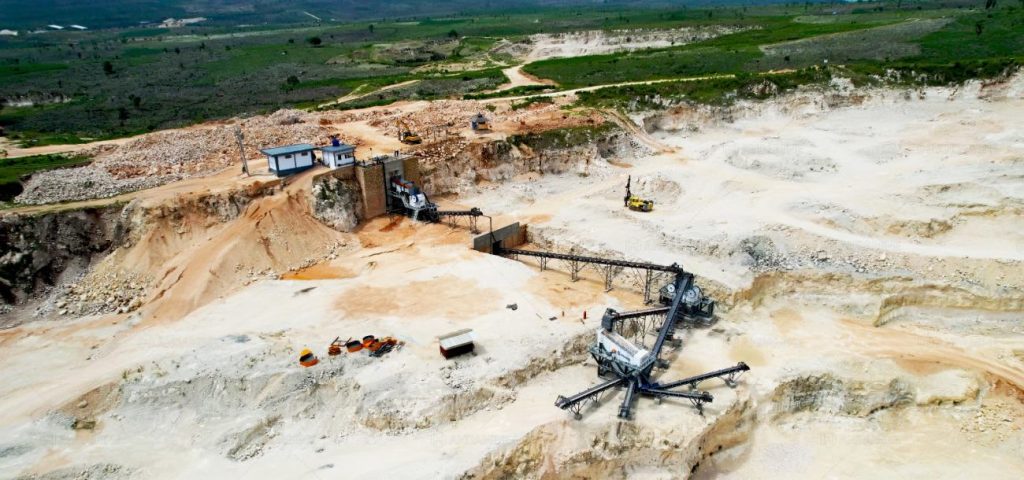
Once the market and raw material are understood, the next step is to create a process flow that can consistently produce the required products. A typical stone processing system may include a vibrating feeder, primary jaw crusher, secondary cone or impact crusher, vibrating screens, conveyors, and, when necessary, tertiary crushing or sand-making equipment.
For hard rock aggregate production, a jaw crusher can handle the initial reduction while cone crushing provides further size reduction. For certain softer or medium-hard materials where particle shape is particularly important, impact crushing may be considered. Screening then separates the material into commercially useful fractions and sends oversize material back into the crushing circuit when a closed circuit is required.
The objective is not to install the largest number of machines possible. Instead, each stage should have a clear role in achieving the final product specification. An appropriately balanced circuit can reduce unnecessary recirculation, improve energy efficiency, and maintain more stable output.
Use Local Construction Trends to Guide Equipment Flexibility
Regional construction patterns can also influence plant design. In areas experiencing highway, bridge, housing, and commercial development, aggregate demand may change quickly as major projects start and finish. A flexible crushing and screening plant can respond more effectively when product requirements change.
This is particularly relevant to markets such as the Philippines, where project locations can be geographically dispersed. A crushing plant in the Philippines may need to serve road construction, concrete production, quarry operations, or smaller regional projects under different site conditions. Mobile crushing and screening equipment can be valuable where transportation distances are high or where the processing location changes with the project.
For established quarries with long-term reserves, however, a stationary plant may offer better long-term production efficiency. The important point is to select mobility based on the business model rather than treating mobile equipment as universally better.

Evaluate Transportation and Customer Location
Aggregate is a relatively low-value, high-volume product, so transportation can have a major influence on its final selling price. A quarry located far from major construction markets may lose its cost advantage if finished aggregate has to travel long distances by truck.
This means plant location and customer distribution should be considered together. In some cases, producing aggregate closer to the quarry is economical. In others, a mobile plant can reduce hauling of raw rock by processing material closer to the point of use. The best solution depends on road conditions, project duration, fuel costs, and local aggregate prices.
Similar considerations apply when evaluating a stone crusher machine Malaysia project. Before purchasing equipment, operators should examine where aggregate will be sold, how far customers are located, and whether the plant will serve one long-term quarry or multiple projects.
Build a Plant That Can Adapt to Market Changes
Aggregate demand rarely remains completely stable. New infrastructure projects can increase demand for specific sizes, while changes in construction activity can reduce demand for others. A flexible screening arrangement, adjustable crusher settings, and sufficient conveyor and stockpile capacity can make it easier to respond to these changes.
Operators should also consider future expansion when designing the initial plant. If demand is expected to increase, the layout should leave enough space for additional crushing, screening, storage, or washing equipment. This can make future upgrades more practical than rebuilding the entire production line.

Conclusion
Matching a stone crushing and screening plant with local aggregate market demand requires more than selecting equipment according to capacity. The right approach connects customer requirements, aggregate specifications, raw material characteristics, production volume, transportation costs, and future market development. Whether the project involves a stone crusher Indonesia operation, a crushing plant in the Philippines, or a stone crusher machine Malaysia application, the most effective plant is the one designed around the products the local market can consistently buy. By starting with market demand and working backward toward equipment selection, quarry operators can create a more productive, flexible, and commercially sustainable crushing operation.