
The stone crushing plant cost is influenced by more than the crushers, screens, and feeders included in a project. Plant layout also affects how far material travels, how many conveyors are required, where stockpiles are positioned, and how much equipment is needed for loading and reclaiming. A well-planned layout can reduce unnecessary material handling and improve long-term operating economics, while a poorly arranged plant may increase costs even when the equipment itself is competitively priced.

Plant Layout Determines the Distance Material Must Travel
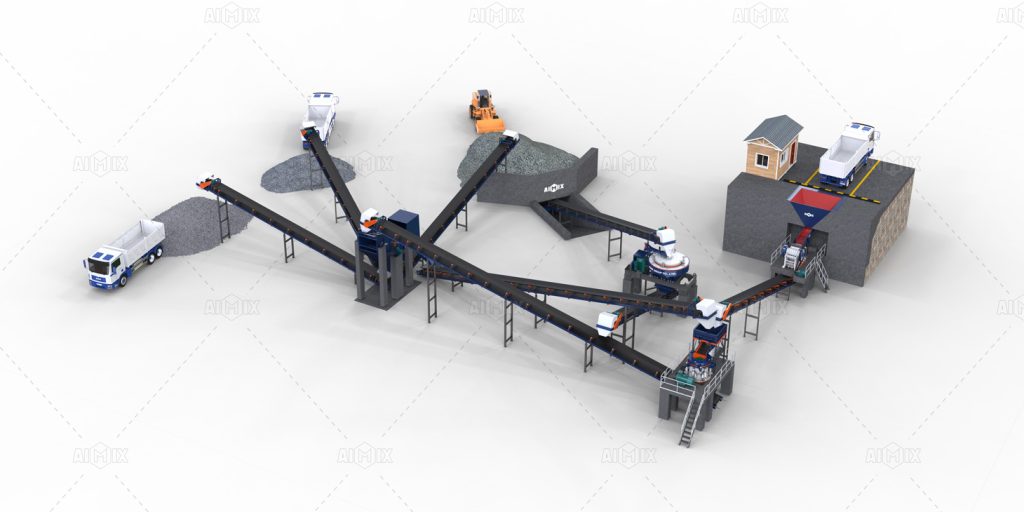
Every tonne of rock entering a crushing plant moves through several stages before becoming a saleable aggregate product. It may pass through a feeder, primary crusher, secondary crusher, screen, tertiary crusher, and finally a stockpile. The physical distance between these stages determines conveyor length, transfer points, support structures, and power requirements.
A compact layout can therefore reduce the amount of conveying equipment required. However, compact does not always mean better. Equipment still needs sufficient space for maintenance, inspection, truck access, and safe operation. The goal is to create a logical material flow rather than simply placing machines as close together as possible.
For a stone crusher machine plant, the ideal arrangement generally follows the processing sequence. Raw material should move forward through the plant with as few unnecessary returns, crossings, and elevation changes as possible. This reduces both initial infrastructure requirements and the energy consumed during operation.
Conveyor Design Has a Direct Effect on Project Cost
Conveyors are often treated as supporting equipment, but their cumulative cost can become significant in a large crushing operation. Longer conveyors require more structure, belts, rollers, drives, electrical systems, and maintenance. Additional transfer points can also create more locations where material spillage, dust, and wear may occur.
Plant layout should therefore consider conveyor routing from the beginning rather than adding conveyors after the main crushing equipment has been selected. Where possible, gravity can assist material movement between stages, while conveyor elevations should be designed around practical access and maintenance requirements.
This is particularly important when comparing different equipment configurations. Two plants may use similar crushers and screens but have noticeably different total project costs because one requires a longer and more complicated conveying system.
Stockpile Location Changes Material Handling Expenses
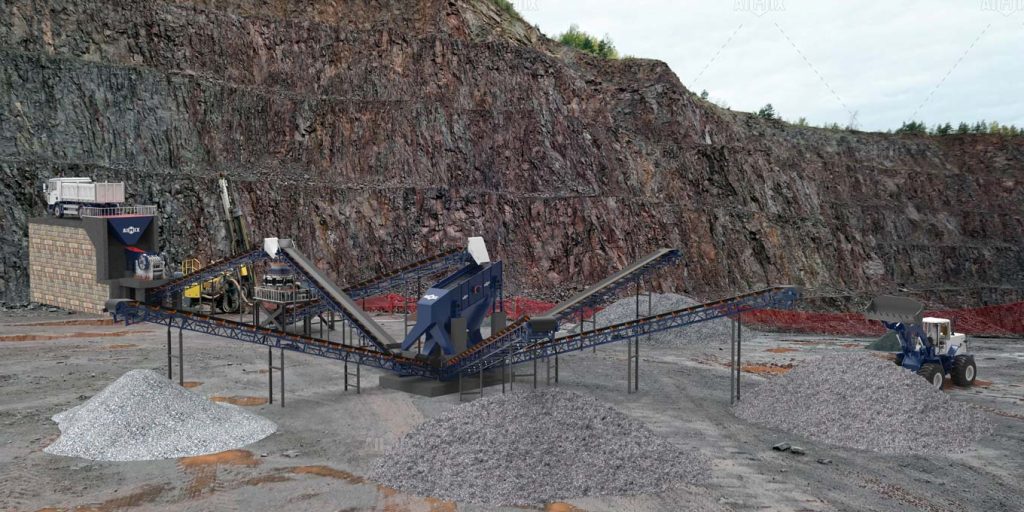
Finished aggregates must eventually be stored before loading and transportation. The location of these stockpiles can have a major influence on material handling costs.
If stockpiles are too far from the screening equipment, longer conveyors may be required. If they are positioned where trucks or loaders cannot easily access them, additional internal hauling may be necessary. Poorly separated stockpiles can also cause different aggregate sizes to mix, creating quality problems and additional rehandling.
A better approach is to position stockpiles according to both production flow and dispatch requirements. High-volume products should generally have convenient loading access, while products requiring further processing should not be placed in locations that make them difficult to return to the crushing circuit.
For a stone crusher plant business, this matters because material handling continues after the crushing process has technically finished. Every unnecessary loader movement, truck trip, or rehandling cycle adds operating cost without increasing the quantity of saleable aggregate.
A Good Layout Reduces Double Handling
Double handling occurs when material must be moved more than once because the original plant arrangement does not provide a direct route from production to storage or dispatch. For example, aggregate may be discharged into a temporary pile, picked up by a loader, and then transported to another stockpile even though a conveyor could have delivered it directly.
This may seem like a small operational issue, but repeated handling can consume fuel, labor, machine hours, and maintenance resources. It can also increase aggregate degradation and create additional traffic around the plant.
The layout should therefore distinguish between material that needs temporary storage and material that can move directly to its final stockpile. A clear flow from crushing to screening to product storage usually provides a better cost structure than a layout dependent on repeated loader movements.
Site Topography Can Change the Most Practical Layout
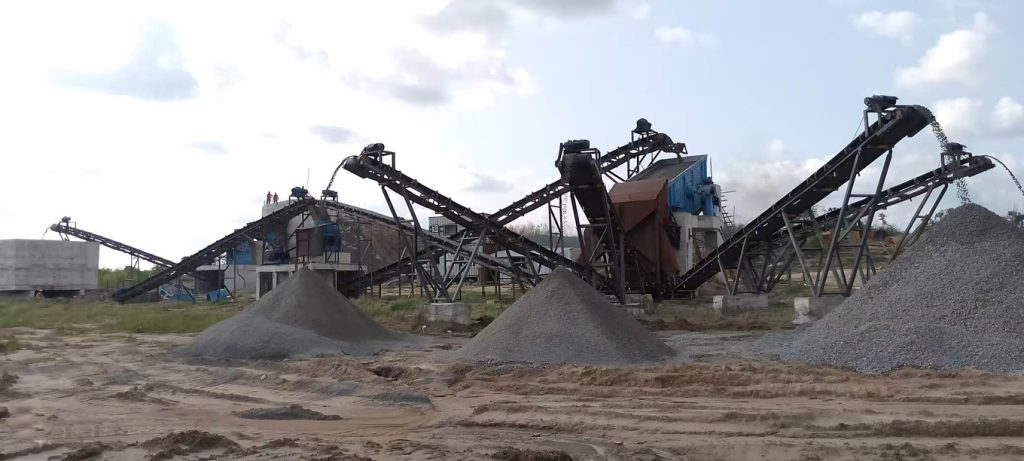
A crushing plant is rarely installed on a perfectly flat site. Quarry benches, slopes, existing roads, drainage channels, and property boundaries can all affect equipment positioning.
A site with natural elevation differences may actually provide an advantage. Crushers and screens can sometimes be arranged along the terrain so that material moves efficiently between stages with less structural steel or shorter conveyors. On the other hand, forcing a standard layout onto an unsuitable site may require extensive earthwork, retaining structures, foundations, or elevated conveyors.
This means stone crushing plant cost should be evaluated together with site conditions. A slightly different equipment arrangement may reduce civil construction and conveying requirements enough to offset changes in equipment configuration.
Mobile Plants Change the Material Handling Equation
For projects where the crushing location changes, a mobile plant can reduce some material transportation requirements by bringing the processing equipment closer to the quarry face or construction site. Instead of hauling all raw rock to a fixed processing area, crushing can take place closer to where the material is extracted.
However, mobile equipment does not eliminate material handling. Stockpiling, screening, final product transportation, and equipment relocation still need to be planned. The best layout depends on whether the project prioritizes fixed long-term production or flexible processing across multiple locations.
This is one reason buyers looking for a crushing plant for sale Australia may evaluate mobility alongside conveyor design and site logistics, especially for remote quarries, infrastructure projects, and operations with changing extraction areas.
Layout Should Be Designed Around the Final Products
The number and location of stockpiles depend directly on what the plant intends to sell. A plant producing only one aggregate size may need a relatively simple storage arrangement, while a multi-product operation may require several dedicated stockpiles.
Product requirements should therefore be established before finalizing the layout. If the market requires several sizes of aggregate and manufactured sand, the screening arrangement, conveyor discharge points, stockpile positions, and potential recirculation routes all need to be considered together.
The objective is not simply to minimize the physical footprint. It is to minimize the total cost of moving each tonne through the plant while maintaining product quality and allowing practical access for maintenance and dispatch.
Lower Layout Costs Can Improve Long-Term Plant Economics
A low purchase price does not automatically mean low stone crushing plant cost over the life of the project. Conveyors, loaders, fuel, electricity, maintenance, civil works, and internal transportation can collectively have a substantial impact on the cost per saleable tonne.
For this reason, plant layout should be treated as part of the production strategy rather than an afterthought. A well-designed flow can shorten conveying distances, reduce double handling, simplify stockpile management, and make better use of existing site conditions. For a growing stone crusher plant business, these savings can ultimately matter more than small differences in the initial equipment quotation.
In other words, the most economical crushing plant is not necessarily the one with the cheapest equipment package. It is the one that moves material through the entire site efficiently—from raw rock to finished stockpile and finally to the customer—with minimal unnecessary handling.