
Starting a stone crusher plant requires more than purchasing crushing equipment and installing it on a suitable site. A successful project begins with confirming the available rock resource, understanding local aggregate demand, designing a practical crushing process, and calculating whether the expected production can support the investment. The right approach connects the quarry resource, equipment configuration, infrastructure, operating costs, product specifications, and sales market before construction begins. Get to know how to start stone crusher plant from the following sections.

Confirm the Quarry Resource Before Planning the Plant
The first step is to determine whether the available raw material can support continuous commercial production. Geological conditions influence the type of crusher required, expected wear rates, production capacity, and final aggregate quality. Important information includes rock type, compressive strength, abrasiveness, maximum feed size, moisture content, and the estimated recoverable reserves.
For example, hard and abrasive granite generally requires a different crushing strategy from softer limestone. The quarry should also be evaluated for bench height, extraction methods, haul-road conditions, and the distance between the mining area and the crushing plant. These factors affect both the initial site layout and the long-term cost of moving material.
Research Aggregate Demand in the Target Market
A crusher plant should be designed around products that customers actually need. Before selecting equipment, investigate the aggregate sizes commonly purchased by concrete plants, asphalt producers, road contractors, building companies, and other local users. Typical products may include manufactured sand, 5–10 mm aggregate, 10–20 mm aggregate, 20–30 mm aggregate, or road-base materials.
Market research should also consider competing suppliers, selling prices, transportation distances, seasonal demand, and major infrastructure projects in the area. A plant with high theoretical capacity may not be profitable if the local market cannot absorb its production. Conversely, a smaller plant can be commercially attractive when it is located close to customers with consistent demand.
Define the Required Production Capacity
After understanding the resource and market, determine the realistic production target. Capacity should not be based only on the maximum rating of an individual crusher. The complete crushing line must be able to maintain the required throughput from feeding and primary crushing to secondary or tertiary crushing, screening, stockpiling, and loading.
For a new project, it is useful to estimate both the planned hourly output and the expected daily production. Operating hours, equipment availability, maintenance time, material characteristics, and seasonal conditions should be included in the calculation. This prevents the plant from being oversized for a market that cannot support the output or undersized for a quarry with strong demand.
Design the Crushing Process Around the Final Products
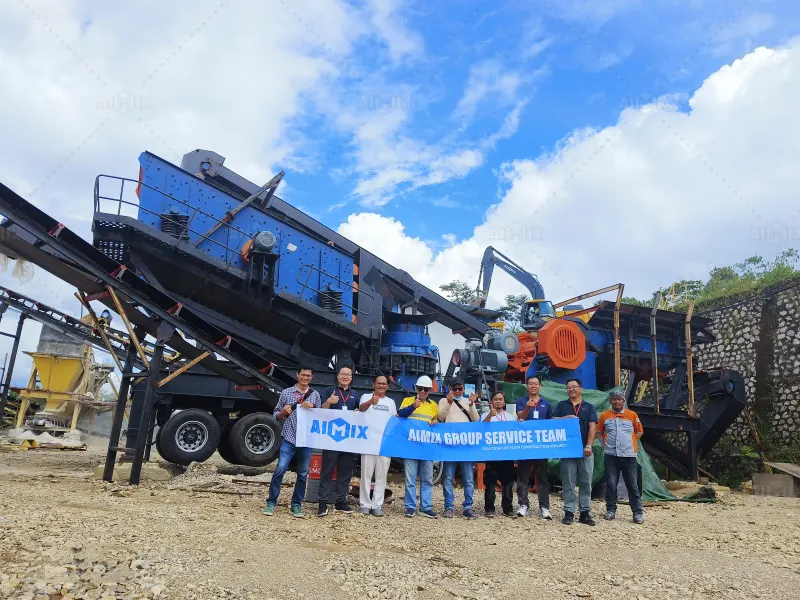
The crushing process should be selected according to the required product sizes rather than simply choosing individual machines. A basic hard-rock operation may use a vibrating feeder and jaw crusher for primary reduction, followed by a cone crusher and vibrating screen for secondary crushing and classification.
If the project requires a higher proportion of manufactured sand, additional crushing or shaping equipment may be necessary. A vertical shaft impact crusher, for example, can be considered when particle shape and fine aggregate production are important. The screening arrangement should also provide sufficient separation to prevent oversized material from circulating unnecessarily through the crushing circuit.
The process should therefore be viewed as one production system. Increasing the capacity of one crusher does not automatically increase total plant output if the feeder, screen, conveyor, or downstream crusher becomes the bottleneck.
Select Equipment for Local Operating Conditions
Equipment selection should reflect the material, capacity, product requirements, and working environment. A fixed crushing plant may be suitable for a long-term quarry with stable reserves and sufficient infrastructure. A mobile or tracked configuration can be more practical when the working face changes frequently or when material must be processed at different locations.
Regional operating conditions can also influence the equipment strategy. For example, businesses researching a stone crusher Indonesia project may need to consider island-based logistics, variable site access, and transportation between different production areas. These factors can make equipment mobility and installation requirements important parts of the planning process.
In addition to the crusher itself, the complete equipment list may include feeders, screens, conveyors, electrical systems, dust-control equipment, magnets, control systems, and stockpile arrangements. The equipment should be selected as a coordinated circuit rather than as unrelated machines.
Plan the Plant Layout and Supporting Infrastructure
A good layout reduces unnecessary material movement and provides safe access for operation and maintenance. The position of the raw-material feeding area, primary crusher, secondary crushing section, screens, conveyors, finished-product stockpiles, and loading area should be considered together.
Infrastructure requirements may include foundations, power supply, drainage, water systems, internal roads, equipment access, workshops, spare-parts storage, and operator facilities. Sufficient space should also be reserved around major machines for inspection, maintenance, and replacement of wear parts.
Transportation should be considered at the same time. If the finished aggregates must travel long distances to customers, logistics can become a major part of the final product cost. A well-designed plant location can therefore provide a competitive advantage even when equipment investment is similar to that of competing producers.
Calculate Investment and Operating Costs
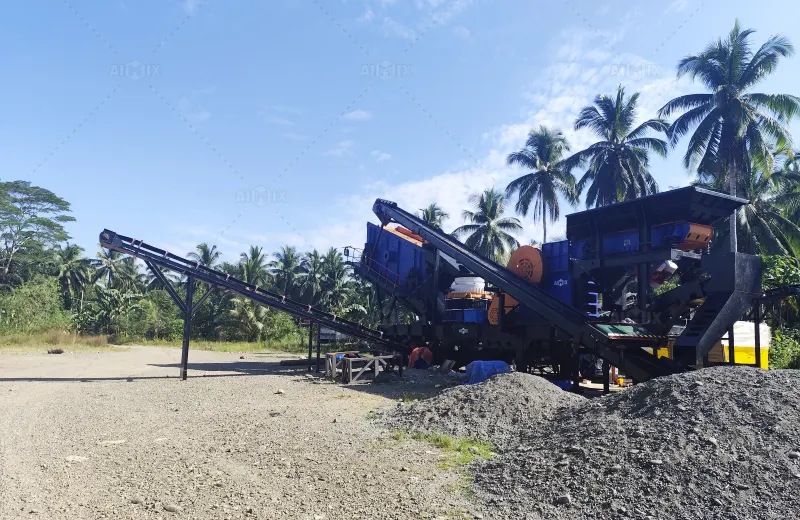
The project budget should cover more than the purchase price of the crushers. Initial investment can include land preparation, foundations, crushing and screening equipment, conveyors, electrical installation, transportation, assembly, commissioning, and supporting infrastructure.
Operating costs should then be estimated using realistic production conditions. Major cost items include electricity or fuel, labor, maintenance, wear parts, lubrication, material handling, and transportation. Wear-part consumption deserves particular attention when processing hard or abrasive rock because frequent replacement can significantly affect the cost per ton.
The financial model should compare these costs with expected sales revenue at realistic utilization rates. It is safer to calculate profitability using conservative production assumptions instead of assuming that the plant will operate at its maximum rated capacity every day.
Consider Local Market and Logistics Requirements
Local market conditions can influence the preferred plant configuration as much as geological conditions. A project supplying aggregates to several construction areas may benefit from a flexible production system, while a large quarry serving a centralized concrete or asphalt market may favor a higher-capacity stationary installation.
For investors evaluating a stone crusher Philippines project, transportation between islands, road accessibility, and equipment delivery can be particularly important planning factors. The cost and time required to move heavy machinery should be considered before finalizing the equipment configuration and plant location.
The same principle applies to other markets: equipment availability, spare-parts supply, technical support, local labor, and transportation infrastructure should all be included in the business plan rather than treated as secondary issues after equipment selection.
Install, Test, and Optimize the Crushing Plant
Once the equipment is installed, commissioning should verify the complete production process rather than focusing only on whether each machine starts correctly. Feed rate, crusher settings, screen efficiency, conveyor loading, product gradation, power consumption, and material circulation should be monitored during trial production.
Initial testing may reveal that the actual production capacity differs from the theoretical equipment rating. Crusher settings can then be adjusted to achieve the required balance between throughput, reduction ratio, product shape, and wear. Screening efficiency should also be checked because poor classification can cause unnecessary recirculation and reduce overall plant performance.
Build the Business Around Consistent Production
Starting a stone crusher plant is ultimately a production and supply-chain decision rather than simply an equipment purchase. Once the plant is operating, performance should be tracked through practical indicators such as tons produced per operating hour, downtime, energy consumption per ton, wear-part consumption, product quality, and order fulfillment.
For a stone crusher Australia project, for instance, remote quarry locations and long transportation distances can make equipment reliability, maintenance planning, and logistics efficiency especially important. Similar considerations apply in any market where downtime or delayed spare-parts delivery can directly affect production costs and customer commitments.

Conclusion
Learning how to start a stone crusher plant requires a step-by-step assessment of the quarry resource, local demand, required capacity, crushing process, equipment, infrastructure, investment, and operating costs. The strongest projects do not simply purchase the largest available crusher; they build a balanced production system around actual material conditions and customer requirements. Careful planning before construction can reduce bottlenec