
Choosing between fixed and mobile crushing systems is a critical decision when developing a copper mine. A properly configured stone crushing plant in Chile must account for ore hardness, extraction depth, transportation distances, and long-term production targets. From large open-pit operations in the Atacama Desert to developing mining areas in the Andes, the right crushing configuration can reduce material handling costs and improve operational efficiency. Mine developers should also consider the demand for construction aggregates needed for access roads, foundations, and supporting infrastructure.
Why Crushing System Selection Matters in Chilean Copper Mines
Chile is one of the world’s major copper-producing countries, with mining operations characterized by diverse geological conditions and challenging terrain. Copper ore is often hard and abrasive, requiring robust crushing equipment and carefully designed material handling systems.
Three factors have a direct impact on crushing plant selection:
- Transportation distances: Long haul routes between extraction areas and processing facilities increase fuel consumption, truck maintenance, and operating costs.
- Site conditions: High-altitude locations, steep access roads, limited installation space, and water availability affect equipment transportation and plant construction.
- Supporting infrastructure: Mine development requires aggregates for access roads, equipment foundations, drainage, and working platforms. A separate gravel crusher or limestone crusher may be necessary when suitable local materials are available.
Therefore, selecting a stone crushing plant in Chile(planta chancadora de piedra Chile) involves more than comparing equipment prices. Developers must evaluate the complete material handling process, including both copper ore processing and supporting construction requirements.
Fixed Crushing Plant: Stability for Long-Term Copper Production
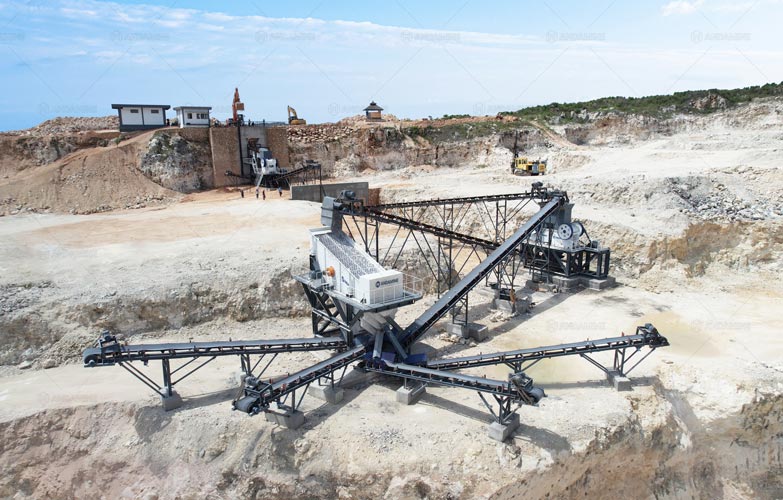
A fixed crushing plant is installed at a permanent location with foundations, feeding systems, conveyors, and supporting infrastructure. It is commonly used in large copper mines where production targets are high and the processing layout is expected to remain stable for many years.
Key Advantages of Fixed Crushing
- High production capacity: Multiple crushing stages can be integrated to process substantial quantities of copper ore continuously.
- Efficient material handling: Belt conveyors transport crushed ore toward stockpiles or processing facilities, potentially reducing dependence on truck haulage.
- Stable production: Permanent equipment arrangements provide consistent feeding, crushing, and screening conditions.
- Convenient maintenance: Dedicated platforms and service areas facilitate equipment inspection and component replacement.
Infrastructure and Investment Considerations
The main limitation is the initial investment. Foundations, electrical systems, access roads, and conveyor corridors can require considerable construction work. If mining activities gradually move farther from the crushing station, additional transportation infrastructure may be necessary.
Fixed installations can also support separate aggregate production lines. For example, a gravel crusher can process suitable rock into road construction materials, while a limestone crusher can produce aggregates for infrastructure projects where limestone deposits are available. These auxiliary operations should be configured independently according to their material characteristics and output requirements.
A fixed stone crushing plant in Chile is generally suitable for established copper mines with predictable production schedules, sufficient installation space, and long-term operating plans.
Mobile Crushing Plant: Flexibility for Expanding Mining Areas
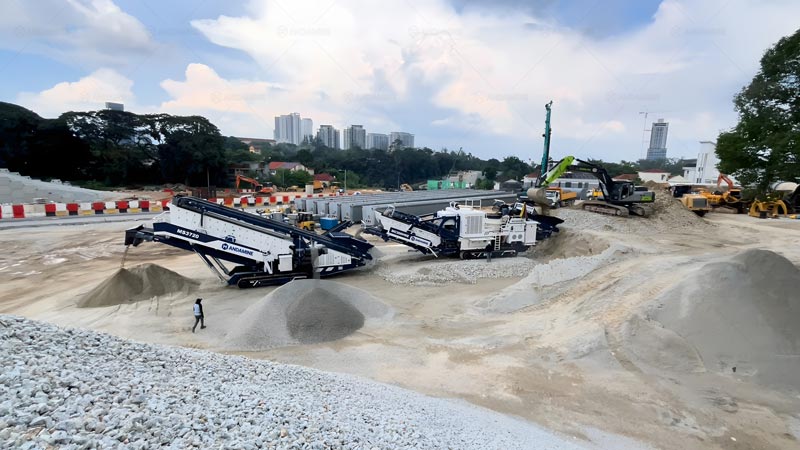
Mobile crushing plants integrate feeding, crushing, and sometimes screening equipment onto tracked or wheeled chassis. Instead of transporting all extracted ore to one permanent crushing station, mining operators can position crushing equipment closer to active excavation areas.
Why Mobile Crushing Is Suitable for Developing Mines
- Shorter transportation distances: Crushing closer to the mining face can reduce the distance oversized raw ore needs to travel.
- Flexible relocation: Tracked crushing units can move between working areas as extraction progresses.
- Reduced site preparation: Mobile configurations can minimize the need for extensive permanent foundations.
- Flexible production arrangements: Different crushing units can be combined to accommodate changing material and capacity requirements.
Recommended Equipment Configuration
A jaw crusher(chancadora de quijada) is commonly used as the primary crushing machine because it can handle large feed sizes and hard copper-bearing rock. Secondary cone crushers reduce the material further, while vibrating screens separate different output sizes. For mobile operations, a tracked jaw crusher can be positioned near the active excavation area to improve material handling efficiency.
Mobile crushing equipment can also support mine construction. A mobile gravel crusher may produce aggregates for temporary access roads and working platforms, while a dedicated limestone crusher can process locally available limestone for other infrastructure applications. These supporting production lines should be evaluated separately from the main copper ore crushing circuit.
However, mobile systems have limitations. Individual units may offer lower capacity than large stationary installations, and relocation, fuel consumption, maintenance, and equipment wear must be included in operating cost calculations.
Fixed vs. Mobile Crushing: Key Differences
The following comparison summarizes the main differences to help Chilean mine developers evaluate the most appropriate solution.
| Evaluation Factor | Fixed Crushing Plant | Mobile Crushing Plant |
|---|---|---|
| Installation | Permanent foundations and infrastructure | Reduced foundation requirements |
| Relocation | Difficult and costly | Relatively flexible |
| Production capacity | Suitable for very high continuous output | Depends on equipment configuration |
| Material transportation | Often integrated with conveyors and haulage | Can crush closer to excavation areas |
| Initial investment | Generally higher infrastructure costs | Potentially lower site preparation costs |
| Long-term operation | Suitable for stable mine layouts | Suitable for changing extraction areas |
| Best application | Large, established copper mines | Developing mines and expanding work areas |
The same decision applies to auxiliary aggregate production. A stationary gravel crusher may be more practical when a mine needs a continuous supply of road construction materials. A mobile gravel crusher offers greater flexibility for temporary construction areas. Similarly, the installation requirements of a limestone crusher(trituradora de piedra caliza) depend on limestone availability, required output, and the expected duration of the construction project.
How to Choose the Right Crushing Configuration
Before purchasing equipment, mine developers should evaluate the material characteristics, production targets, transportation arrangements, and expected mine life. The following steps provide a practical selection framework.
Step 1: Analyze Material Hardness and Feed Size
Copper ores containing hard rock require suitable primary and secondary crushing equipment. A jaw crusher is frequently selected for primary reduction, while cone crushers are suitable for subsequent size reduction. The feed opening, crushing chamber, motor power, and wear-resistant components must match the actual ore characteristics.
Other materials require different configurations. A limestone crusher is designed around limestone’s specific crushing characteristics, while a gravel crusher must accommodate the source material and required aggregate sizes. Neither should automatically be substituted for equipment designed to process hard copper ore.
Step 2: Calculate Transportation and Operating Costs
Estimate the distance between the mining face, crushing station, and processing facility. Compare truck haulage expenses with potential savings from mobile crushing or conveyor-based transportation. For a stone crushing plant in Chile, total operating cost per ton is a more meaningful comparison than equipment purchase price alone.
Step 3: Consider Future Mine Expansion
If extraction areas are expected to move frequently, mobile equipment may provide greater flexibility. For operations with a stable processing location and predictable production targets, fixed crushing infrastructure may deliver better long-term efficiency. Some projects can also combine mobile primary crushing with stationary secondary crushing and screening.
Planning Crushing and Aggregate Production for Chilean Mining Projects
Successful mine development requires coordination between geological surveys, equipment configuration, site engineering, and material transportation. In Chile, project teams should also assess high-altitude operating conditions, temperature variations, dust control, water availability, and access to maintenance services.
For projects involving both ore processing and site construction, developers should distinguish between the main copper crushing circuit and auxiliary aggregate production. A stone crushing plant in Chile may use a jaw crusher and cone crusher to process copper ore, while a separate gravel crusher or limestone crusher(trituradora de piedra para grava) handles road-building and general construction aggregates. This separation ensures that each production line is designed for its intended material and output requirements.
Andamine provides crushing and screening equipment configurations for different rock-processing requirements, including jaw crushers, cone crushers, impact crushers, vibrating feeders, and screens. Whether a project requires a stationary installation or a mobile stone crushing plant in Chile, the equipment configuration should match the ore characteristics, required capacity, final product specifications, and available site infrastructure.
Before requesting a project quotation, prepare the raw material type, maximum feed size, required capacity in tons per hour, final product sizes, and mine location. Providing these details allows equipment suppliers to evaluate the appropriate crushing stages and recommend a practical solution for both current production needs and future mine development.