
In recent years, South America has witnessed a significant paradigm shift in environmental governance, with Chile leading the charge through rigorous legislative updates. As the nation intensifies its commitment to sustainable development and air quality management, heavy industries face a transformative regulatory landscape. Among the most profoundly affected sectors is the mining and construction infrastructure supply chain, where industrial processing facilities must now balance production targets with stringent ecological safeguards.
Operational compliance under these new mandates requires a thorough re-engineering of traditional processing workflows. Specifically, the operation of a modern stone crusher plant Chile(planta chancadora de piedra Chile) relies upon must now integrate advanced emission-reduction technologies directly into its core design. These upgraded environmental policies primarily target particulate matter (PM2.5 and PM10), forcing operators to re-evaluate their mechanical throughput capacity, moisture management systems, and overall structural containment strategies to avoid severe legal and financial penalties.
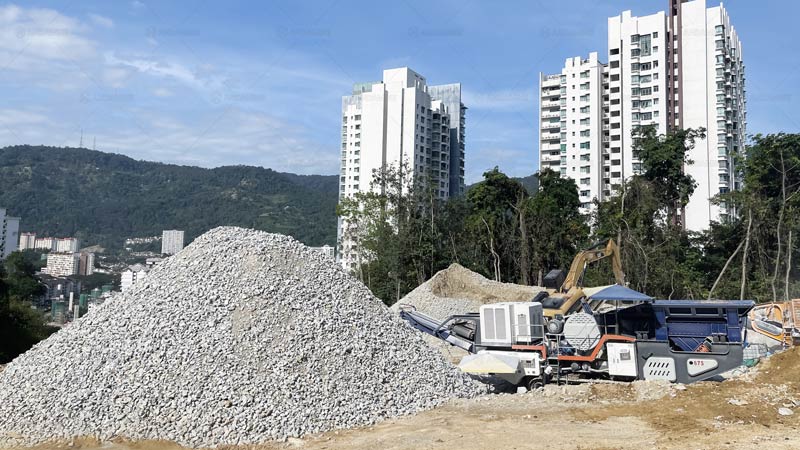
Stricter Environmental Frameworks in Chilean Communes
The regulatory updates introduced by Chile’s Ministry of the Environment (MMA) focus heavily on atmospheric decontamination plans (PPDA). These plans establish rigorous thresholds for dust emissions, noise pollution, and water usage in areas dense with industrial activity. For infrastructure projects utilizing a stone crusher plant Chile, this translates to mandatory continuous monitoring and the implementation of Best Available Techniques (BAT).
Unlike historical regulations that allowed for periodic self-reporting, the contemporary framework demands real-time data transparency. Compliance inspectors are empowered to halt operations immediately if ambient dust levels exceed localized air quality standards. Consequently, the legal pressures felt within Chile are echoing across borders, influencing neighboring markets and setting a benchmark for standard operations in major manufacturing hubs, including the busy sector of stone crusher plants Lima, Peru.
Balancing Crushing Plant Capacity with Compliance
One of the primary challenges facing aggregate producers is maintaining or expanding plant capacity while adhering to stricter emission caps. Mechanical crushing inherently generates substantial volumes of fugitive dust during primary, secondary, and tertiary reduction stages. To prevent dust from becoming airborne, operators have traditionally relied on water suppression systems; however, Chile’s simultaneous focus on water conservation complicates this approach.
The Capacity-Suppression Trade-off
When an aggregate plant(una planta de agregados) attempts to maximize its hourly tonnage, the velocity of material moving through screens, conveyors, and transfer points increases exponentially. This increased velocity accelerates dust generation. Under the new policies, maximizing throughput without an upgraded dust mitigation system is virtually impossible. Operators are finding that traditional methods either consume too much water—violating extraction limits—or fail to capture fine PM2.5 particles effectively.
To visualize the operational shifts required to maintain optimal capacity under the updated environmental laws, consider the structural and mechanical modifications outlined in the table below:
| Operational Component | Conventional Method | Upgraded Compliant Standard | Impact on Processing Capacity |
|---|---|---|---|
| Material Feeding | Open-air dump hoppers | Enclosed vibrating feeders with dry fogging | Maintains high feed rates without ambient dust escape |
| Crushing Chambers | Standard open jaw/cone systems | Integrated dust extraction hoods & negative pressure | Prevents localized pressure surges from blowing out dust |
| Screening & Sizing | Uncovered multi-deck vibrating screens | Fully sealed dust-tight screening enclosures | Ensures high-frequency sorting remains uninterrupted |
| Conveyor Transport | Exposed belts | Wind guards and covered conveyor galleries | Sustains high-speed transport during adverse weather |
Innovations in Dust Control Technologies
To survive commercially under Chile’s upgraded environmental policies, modern aggregate plant configurations must shift from reactive dust suppression to proactive dust prevention. This has sparked a wave of technological innovation across processing facilities nationwide.
- Dry Fog Suppression Systems: Utilizing sonic atomizing nozzles, these systems produce water droplets under 10 microns in size. These micro-droplets attach to PM2.5 dust particles, increasing their weight and causing them to settle back into the material stream without overwetting the aggregate.
- Advanced Negative Pressure Enclosures: By wrapping crushing chambers in high-durability seals and pulling air through automated baghouse filters, dust is captured at the source before it ever escapes into the atmosphere.
- Chemical Stabilization Agents: In arid regions such as the Atacama, operators are introducing eco-friendly binding agents to haul roads and stockpiles, significantly cutting down fugitive dust without draining local aquifers.
The Shift Toward Modular and Mobile Solutions
Another major trend resulting from strict regional environmental permits is the rapid adoption of a mobile stone crusher plant(planta de trituración móvil) over permanent, fixed installations. Traditional fixed plants require extensive civil works, concrete foundations, and long-term environmental impact assessments (EIA) that can take years to clear Chilean regulatory bodies.
Flexibility and Reduced Footprint
A mobile stone crusher plant offers distinct regulatory advantages under the new Chilean framework. Because these units are track-mounted or wheel-mounted, they can be deployed directly at the quarry face or construction site, minimizing the need for haul trucks to transport raw material over long distances—a major source of ambient dust. Furthermore, the modular nature of a mobile stone crusher plant allows operators to relocate equipment easily once a project is complete, simplifying site remediation and closure plans required by law.
This flexibility is proving highly attractive not only within Chile but also for developers managing urban infrastructure demands nearby, accelerating the adoption of similar mobile setups among stone crusher plants Lima, Peru, where urban density complicates air quality management.
Optimizing Closed-Circuit Operations
Modern mobile configurations frequently utilize closed-circuit designs, combining crushing, screening, and return conveyors on a single chassis. This integrated layout significantly reduces the number of material transfer points. Since every transfer point represents a potential source of fugitive dust emission, minimizing these transitions allows the aggregate plant to operate at maximum capacity while comfortably staying within the legal emission limits defined by Chilean authorities.
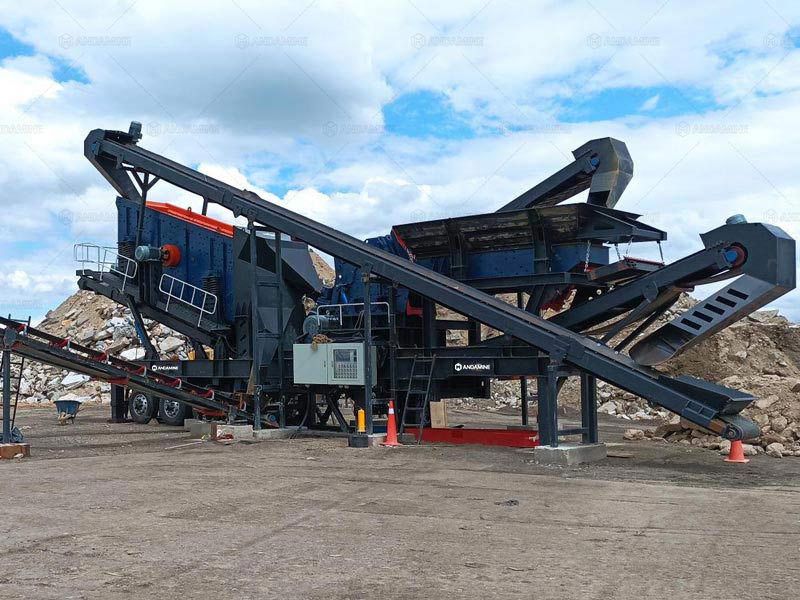
Regional Implications and the Andean Market
The operational adjustments made within Chile are reshaping the broader Andean processing market. As international manufacturers upgrade their equipment lines to meet the strict demands of a stone crusher plant Chile operates, these cleaner, more efficient technologies are naturally migrating to adjacent nations. For instance, engineering firms working with stone crusher plants Lima, Peru(trabajando con planta chancadoras de piedra Lima Perú) are increasingly adopting Chilean dust mitigation standards to future-proof their operations against anticipated regulatory tightening in Peru.
Furthermore, international investment in South American infrastructure is increasingly tied to strict Environmental, Social, and Governance (ESG) criteria. Financial institutions are hesitant to fund quarrying or aggregate ventures that rely on outdated, high-emission machinery. Consequently, investing in advanced dust extraction, enclosed screening systems, and highly efficient mobile stone crusher plant technology is no longer just a matter of local regulatory compliance; it has become a fundamental requirement for securing capital and maintaining cross-border market competitiveness.
Ultimately, while Chile’s upgraded environmental policies initially presented a steep technical hurdle for the aggregate industry, they have catalyzed a necessary technological evolution. By embracing enclosed systems, advanced dry fogging, and highly adaptive mobile crushing units, operators are successfully proving that maximizing industrial capacity and preserving pristine air quality can go hand in hand. The facilities that adapt to these standards are not only surviving under the strict Chilean laws but are also setting the operational blueprint for sustainable aggregate production across the entire South American continent.